![]() |
![]() CDROM VERSION POSTER STORE ABBOTT ANSEL ADAMS ROBERT ADAMS ALVAREZ BRAVO ATGET BELLOCQ BLOSSFELDT BOURKE-WHITE BRANDT BRASSAÏ CALLAHAN CAMERON COBURN CUNNINGHAM DeCARAVA DOISNEAU EGGLESTON EVANS FENTON FRIEDLANDER GOWIN GUTMANN HILL&ADAMSON HINE KARSH KERTÉSZ KLEIN KOUDELKA LANGE LARTIGUE LAUGHLIN LEVITT MAPPLETHORPE MEATYARD MEYEROWITZ MODEL MODOTTI MUYBRIDGE NADAR NEWMAN O'SULLIVAN OUTERBRIDGE PARKS PENN RIIS RODCHENKO SALGADO SHERMAN SHORE SMITH SOMMER STEICHEN STIEGLITZ STRAND TALBOT UELSMANN WALDMAN WATKINS WESTON WHITE WINOGRAND WOLLEH |
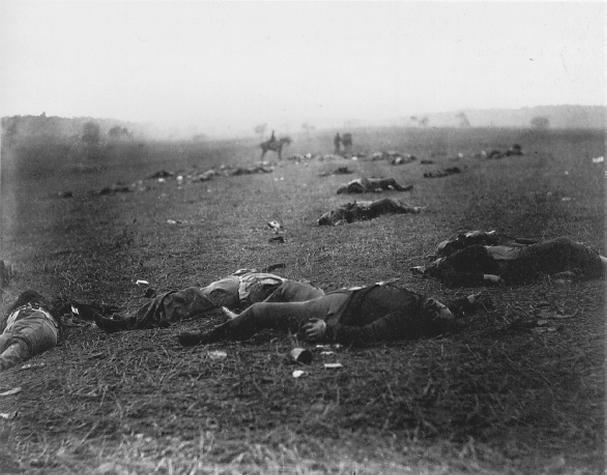
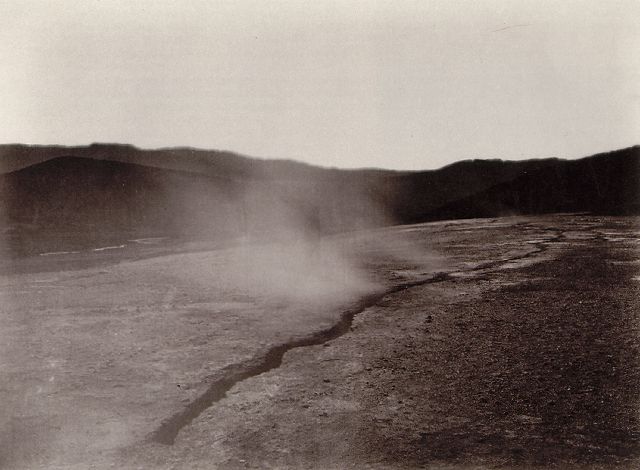
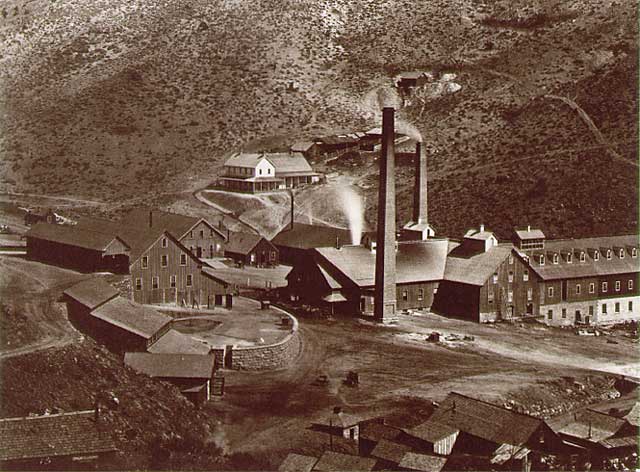
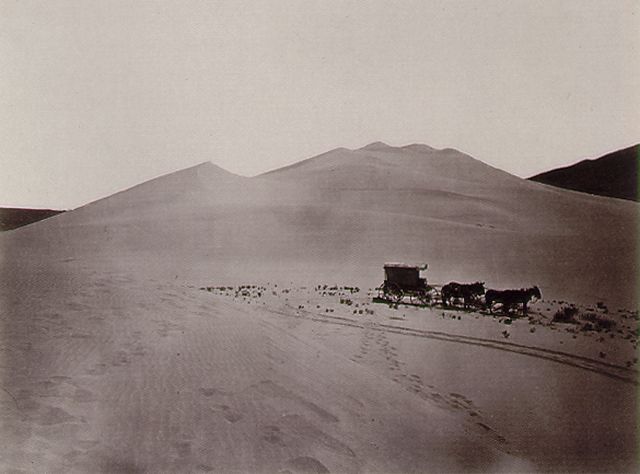
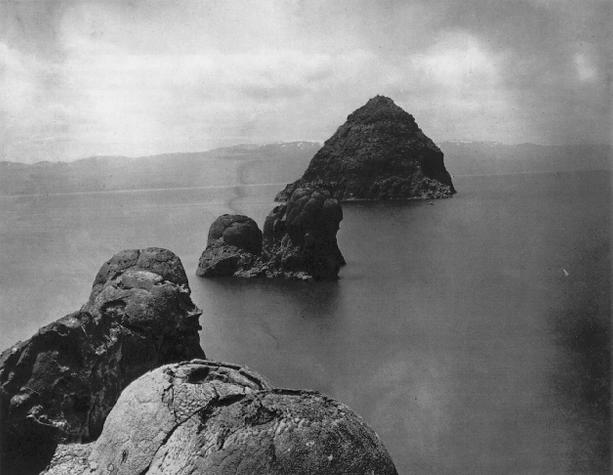
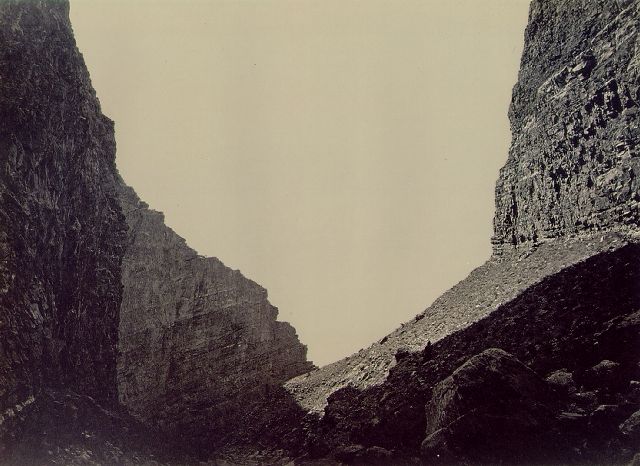
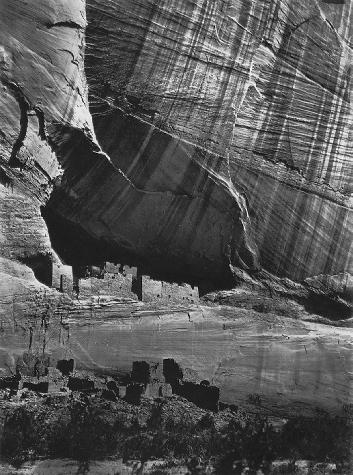
![]() Text from A World History of Photography Profile: Timothy O'Sullivan Timothy O'Sullivan came to landscape photography after four years of experience photographing behind the lines and on the battlefields of the Civil War. A former assistant in Mathew Brady's New York studio, in 1861 he had joined the group known as "Brady's Photographic Corps," working with Alexander Gardner. Because Brady refused to credit the work of individual photographers, Gardner, taking O'Sullivan along, established his own Washington firm to publish war views. War images taken by O'Sullivan are wide-ranging in subject and direct in their message, including among them the weariness of 'inaction and continual waiting, and the horror of fields of the dead. After the war, O'Sullivan, faced with the dullness of commercial studio work, discovered an optimum use for his energies and experience as a photographer on the survey teams that were being organized under civilian or military leadership to document wilderness areas west of the Mississippi. Departing from Nevada City with 9 X 12 inch and stereograph cameras, 125 glass plates, darkroom equipment, and chemicals, for more than two years he explored the strange and inhospitable regions along the 40th Parallel with a group headed by the eminent geologist Clarence King. Following a brief period with the Darien Survey to the Isthmus of Panama, where both the humid atmosphere and the densely foliated terrain made photography difficult, he found another position on a western survey. As Weston Naef has pointed out, photography on the Geological Surveys West of the 100th Meridian, as the expedition commanded by Lieutenant George M. Wheeler of the Army Corps of Engineers was called, "was not so much a scientific tool as it was a means of publicizing the Survey's accomplishments in the hopes of persuading Congress to fund military rather than civilian expeditions in the future." O'Sullivan's purpose in joining this team was more likely personal than political in that he was allowed by Wheeler to be his own master, in charge of portions of the expedition, and thus did not have to take orders from geologists. Involved in the dramatic if not scientifically defensible exploit of attempting to ascend the Colorado River through the Grand Canyon, Wheeler noted O'Sullivan's professionalism in producing negatives in the face of all obstacles, including a near drowning. Following another brief period with King, O'Sullivan joined a Wheeler-led survey to the Southwest where he documented not only geological formations but members of the pueblo and rock-dwelling tribes in the region of the Canyon de Chelle. After 1875, O'Sullivan's problematical health and the winding down of survey photography put an end to further involvement with the western landscape. Following a brief period in 1879 as photographer in the newly established United States Geological Survey, of which King was first director, and a position with the Treasury Departmerit in Washington, O'Sullivan was forced by his tubercular condition to resign; he died a year later in Staten Island at age forty-two. O'Sullivan approached western landscape with the documentarian's respect for the integrity of visible evidence and the camera artist's understanding of how to isolate and frame decisive forms and structures in nature. Beyond this, he had the capacity to invest inert matter with a sense of mysterious silence and timelessness; these qualities may be even more arresting to the modern eye than they were to his contemporaries, who regarded his images as accurate records rather than evocative statements.
|
Buying through this link supports Masters of Photography
|