![]() |
![]() CDROM VERSION POSTER STORE ABBOTT ANSEL ADAMS ROBERT ADAMS ALVAREZ BRAVO ATGET BELLOCQ BLOSSFELDT BOURKE-WHITE BRANDT BRASSAÏ CALLAHAN CAMERON COBURN CUNNINGHAM DeCARAVA DOISNEAU EGGLESTON EVANS FENTON FRIEDLANDER GOWIN GUTMANN HILL&ADAMSON HINE KARSH KERTÉSZ KLEIN KOUDELKA LANGE LARTIGUE LAUGHLIN LEVITT MAPPLETHORPE MEATYARD MEYEROWITZ MODEL MODOTTI MUYBRIDGE NADAR NEWMAN O'SULLIVAN OUTERBRIDGE PARKS PENN RIIS RODCHENKO SALGADO SHERMAN SHORE SMITH SOMMER STEICHEN STIEGLITZ STRAND TALBOT UELSMANN WALDMAN WATKINS WESTON WHITE WINOGRAND WOLLEH |
Text from Wikipedia
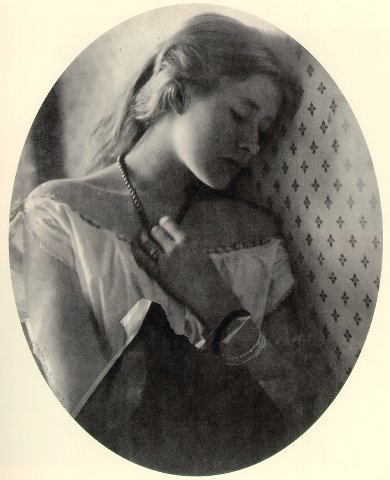
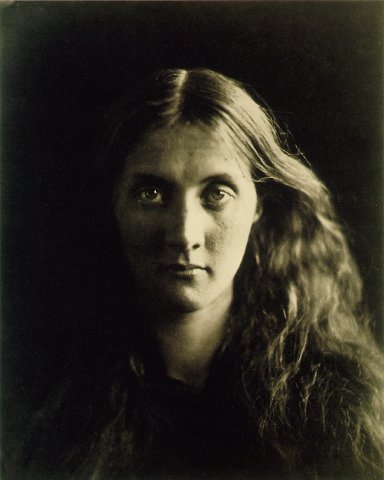
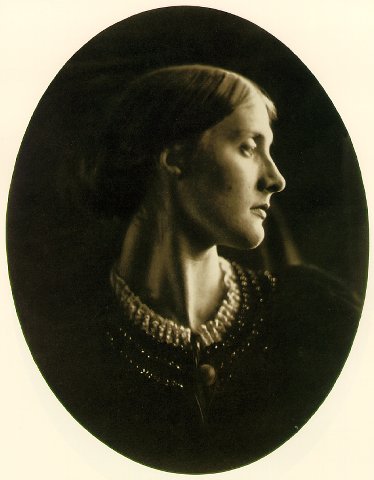
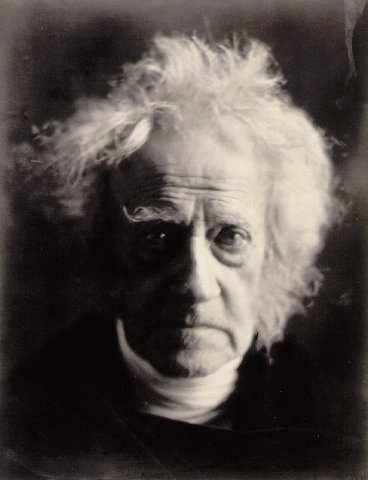
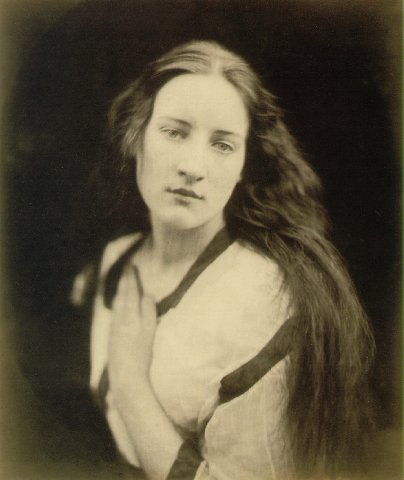
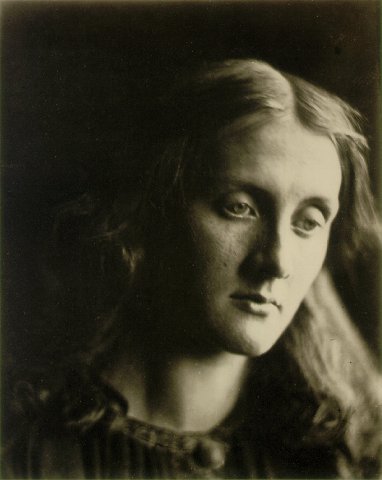
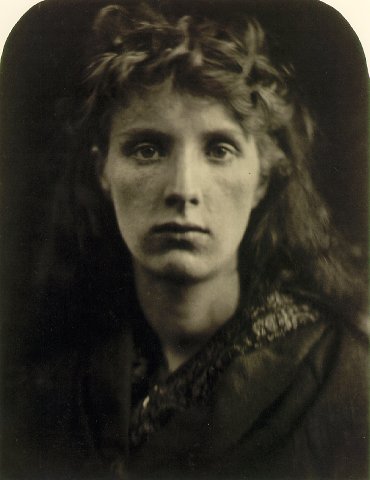
Cameron, Julia Margaret Julia Margaret Cameron (June 11, 1815 – January 26, 1879) was a British photographer. She became known for her portraits of celebrities of the time, and for Arthurian and similar legendary themed pictures. Cameron's photographic career was short (about 12 years) and came late in her life. Her work had a huge impact on the development of modern photography, especially her closely cropped portraits which are still mimicked today. Her house, Dimbola Lodge, on the Isle of Wight can still be visited.
Early lifeJulia Margaret Cameron was born Julia Margaret Pattle in Calcutta, India, to James Pattle, a British official of the East India Company, and Adeline de l'Etang, a daughter of French aristocrats. Cameron was from a family of celebrated beauties, and was considered an ugly duckling among her sisters. For example, each sister had an attribute which she used as a nickname. Her sisters had nicknames like "beauty". Julia's nickname was "talent". This instilled in Julia an obsession with idealized beauty.
MarriageJulia was educated in France, but returned to India in 1838, to marry Charles Hay Cameron, a jurist and member of the Law Commission stationed in Calcutta who was twenty years her senior. In 1848, Charles Hay Cameron retired and the family moved to London, England. Cameron's sister, Sarah Prinsep, had been living in London and hosted a salon at Little Holland House in Kensington, where famous artists and writers regularly visited. In 1860, Cameron visited the estate of poet Alfred Lord Tennyson on the Isle of Wight. Julia was taken with the location and the Cameron family purchased a property on the island soon after. They called it Dimbola Lodge after the family's Ceylon estate.
PhotographyIn 1863, when Cameron was 48 years old, her daughter gave her a camera as a present, thereby starting her career as a photographer. Within a year, Cameron became a member of the Photographic Societies of London and Scotland. In her photography, Cameron strove to capture beauty. She wrote, "I longed to arrest all the beauty that came before me and at length the longing has been satisfied."Her neighbour on the Isle of Wight, Alfred Lord Tennyson often brought friends to see the photographer. Cameron was always keen to take pictures, and though her photography is not unconventional it shows a certain spontaneity which was not common in the work of other photographers of the time. Her enthusiasm for her craft meant that her children and others sometimes tired of her endless photographing, but it also means that we are left with some of the best of records of her children and of the many notable figures of the time who visited her. During her career, Cameron registered each of her photographs with the copyright office and kept detailed records. Her shrewd business sense is one reason that so many of her works survive today. Another reason that many of Cameron's portraits are significant is because they are often the only existing photograph of historical figures. Many paintings and drawings exist, but, at the time, photography was still a new, challenging medium in which she was a pioneer. The bulk of Cameron's photographs fit into two categories: celebrity portraits and illustrations for literary works.
PortraitsCameron's sister ran the artistic scene at Little Holland House, which gave her many famous subjects for her portraits. Some of her famous subjects include: Charles Darwin, Alfred Lord Tennyson, Robert Browning, John Everett Millais, Dante Gabriel Rossetti, Edward Burne-Jones, Ellen Terry and George Frederic Watts. Most of these distinctive portraits are cropped closely around the subject's face and are in soft focus. Cameron was often friends with these Victorian celebrities, and tried to capture their personalities in her photos.
Photographic illustrationsCameron's posed photographic illustrations represent the other half of her work. In these illustrations, she frequently photographed historical scenes or literary works, which often took the quality of oil paintings. Cameron's friendship with Tennyson led to his asking her to photograph illustrations for his Idylls of the King. These photographs are designed to look like oil paintings from the same time period, including rich details like historical costumes and intricate draperies. Today, these posed works are sometimes dismissed by art critics. Nevertheless, Cameron saw these photographs as art, just like the oil paintings they imitated.
Later lifeIn 1875 the Camerons moved back to Ceylon (now Sri Lanka). Julia continued to practice photography but complained in letters about the difficulties of getting chemicals and pure water to develop and print photographs. Also, in India, she did not have access to Little Holland House's artistic community. She also did not have a market to distribute her photographs as she had in England. Because of this, Cameron took fewer pictures in India. These pictures were of posed Indian natives, paralleling the posed pictures that Cameron had taken of neighbours in England. Almost none of Cameron's work from India survives. Cameron died in Ceylon in 1879.
|
Buying through this link supports Masters of Photography
|